The opening day
The Bridge Reconnaissance
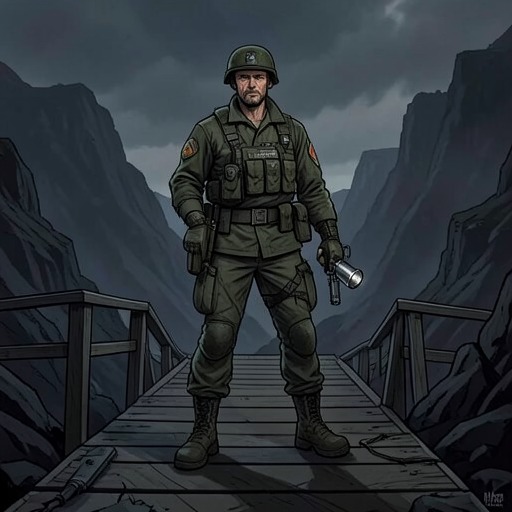
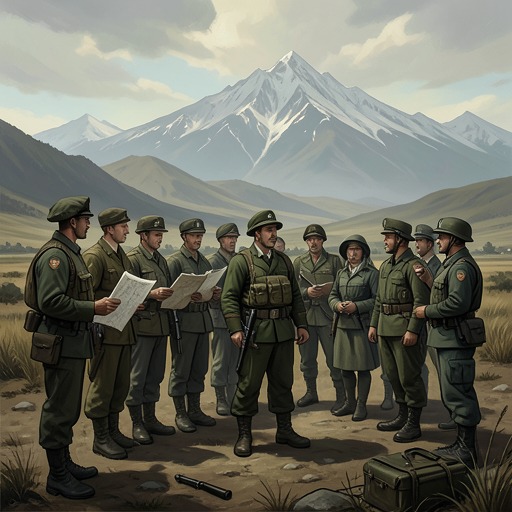
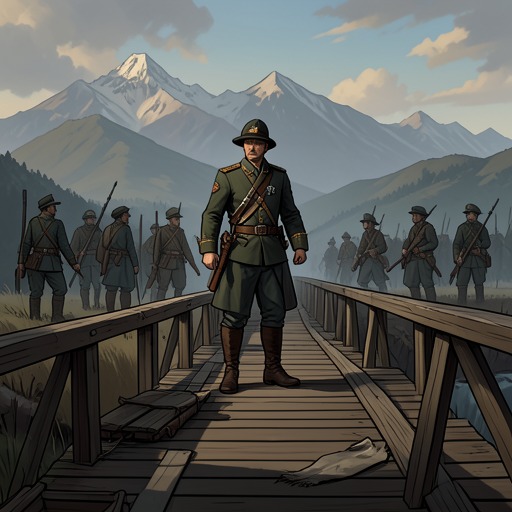
[Robert Jordan](entity:character-recall-character-robert-jordan-e20ff5e3b1e8) lies in the mountain forest with [Anselmo](entity:character-recall-character-anselmo-0b8a6720ce09), studying the road, mill, and guarded bridge he has been sent to destroy. Anselmo explains the posts and the local terrain; Jordan checks the map and asks how many men can be gathered for the operation.
The mission is not simply to demolish a bridge: the explosion must coincide with a Republican attack so enemy reinforcements cannot reach the pass. Jordan’s orders from [Golz](entity:character-recall-character-golz-25c495db4bc0) make the timing crucial, though the attack’s start cannot be known with certainty until it is underway.
Two nights before the attack
Golz’s Impossible Orders
Jordan recalls [Golz](entity:character-recall-character-golz-25c495db4bc0) explaining that the bridge must remain intact until the Republican attack begins, then be destroyed to block the sole road available for enemy reinforcements. Golz warns that orders and plans may change, but insists Jordan must be ready to act when the planes signal the assault.
The general admits the operation is dangerous and politically vulnerable to interference. Jordan accepts the assignment, aware that he must obey orders whose timing could expose the guerrillas to disaster.
The opening afternoon
Pablo’s Suspicion
[Anselmo](entity:character-recall-character-anselmo-0b8a6720ce09) leads Jordan to the hidden camp, where [Pablo](entity:character-recall-character-pablo-ae43f39c6dd1) challenges his authority and asks what is in the packs. Jordan explains that the explosives are for a bridge, not for Pablo’s own use. Anselmo rebukes Pablo for putting the safety of his band ahead of the Republican cause.
Pablo initially carries a pack and shows Jordan his horses, but his pride in them gives way to fear that an attack will bring reprisals and force the band from its refuge. Jordan reads the change in him as a warning that Pablo may abandon or betray the operation.
The opening afternoon
Rafael and the Camp
At the cave, Jordan meets [Rafael](entity:character-recall-character-rafael-6d6e18cf18a7), the joking, undisciplined gypsy, and learns that the band possesses a Lewis gun with limited ammunition and little practical expertise. Their banter briefly eases the strain of the mission, while Jordan makes sure the explosives are moved safely away from the cave’s fire.
[Pablo](entity:character-recall-character-pablo-ae43f39c6dd1)’s wife, [Pilar](entity:character-recall-character-pilar-8a2ad262e179), welcomes Jordan, supports the bridge mission, and warns him to treat [Maria](entity:character-recall-character-maria-de0c38967fe7) carefully because she has suffered greatly. She says Pablo is no longer dependable and explains that [El Sordo](entity:character-recall-character-el-sordo-71ed13b2c851) may be able to provide additional fighters.
The opening evening
Jordan Meets Maria
[Maria](entity:character-recall-character-maria-de0c38967fe7) serves supper in the cave, and Jordan is immediately drawn to her. She explains that she was rescued after a train raid, having been imprisoned and shorn by the Fascists; she has only recently begun to recover from the shock and violence she endured.
[Pilar](entity:character-recall-character-pilar-8a2ad262e179) tells Jordan that Maria should eventually be taken to a safe place under the Republic. Jordan promises to protect her and becomes aware that their mutual attraction is already changing his sense of the time he may have left.
The opening evening
The Bridge Is Refused
At supper Jordan announces that he will destroy the bridge. [Pablo](entity:character-recall-character-pablo-ae43f39c6dd1) refuses to help and declares that no bridge will be blown in his territory. [Pilar](entity:character-recall-character-pilar-8a2ad262e179) openly opposes him, and several members of the band side with her and the Republic.
Pablo backs down without surrendering his resentment. Jordan chooses not to kill him, despite the opportunity and [Rafael](entity:character-recall-character-rafael-6d6e18cf18a7)’s urging, because a stranger’s assassination could destroy the fragile organization needed for the mission. The decision leaves a dangerous, unresolved threat inside the camp.
That evening, in recollection
Pablo’s Village Recalled
[Pilar](entity:character-recall-character-pilar-8a2ad262e179) recalls the first days of the uprising in her village. [Pablo](entity:character-recall-character-pablo-ae43f39c6dd1) organized the seizure of the town and assault on the Civil Guard barracks, then oversaw the execution of the captured guards and the killing of local Fascists.
Her account shows how a supposedly organized revolutionary act became a drunken mob’s cruelty. Some victims were beaten and thrown from the cliff; others were mocked, beaten, or killed in the town hall. Pilar felt shame at the violence and recognized that the movement had begun in moral disaster as well as political hope.
The first days of the uprising, recounted that evening
Pablo’s Decline Revealed
[Pilar](entity:character-recall-character-pilar-8a2ad262e179) describes how the mob’s violence escalated after the killings in the plaza, as drunkenness and humiliation turned the people against their captives. The priest and the remaining prisoners were attacked in the town hall after [Pablo](entity:character-recall-character-pablo-ae43f39c6dd1) unlocked the door, and the crowd’s frenzy overwhelmed any prospect of measured justice.
Afterward Pablo said he had liked the killings, though he was disappointed that the priest had died without the dignity he expected. Pilar saw the brutality that had once made him a powerful leader as part of the same character now collapsing under fear and remorse.
The first morning after Jordan’s arrival
The Snowbound Camp
A large Fascist aircraft formation passes over the camp, alarming the guerrillas. Jordan interprets the planes as evidence that the enemy may know of the coming offensive and orders [Anselmo](entity:character-recall-character-anselmo-0b8a6720ce09) and [Rafael](entity:character-recall-character-rafael-6d6e18cf18a7) to watch the road, record traffic, and monitor the posts.
[Fernando](entity:character-recall-character-fernando-c4334b77e70f) reports rumors of a Republican offensive and guarded bridges, deepening Jordan’s concern that the operation has been compromised. As Jordan and [Pilar](entity:character-recall-character-pilar-8a2ad262e179) set out to meet [El Sordo](entity:character-recall-character-el-sordo-71ed13b2c851), an unseasonable snowstorm begins, threatening movement and obscuring the terrain.
The first day after the snow begins
Pilar’s Village Story
On the way to [El Sordo](entity:character-recall-character-el-sordo-71ed13b2c851), [Pilar](entity:character-recall-character-pilar-8a2ad262e179) tells Jordan and [Maria](entity:character-recall-character-maria-de0c38967fe7) about the village killings in greater detail. She describes the line of peasants who were made to beat the Fascist prisoners and how the crowd’s restraint broke down as mockery, drinking, and revenge took hold.
Maria listens until the story becomes too painful and asks Pilar to stop. The account gives Jordan a vivid understanding of the violence inflicted by his own side and complicates any easy division between righteous cause and righteous conduct.
The first day after the snow begins
Jordan Meets El Sordo
Jordan, [Pilar](entity:character-recall-character-pilar-8a2ad262e179), and [Maria](entity:character-recall-character-maria-de0c38967fe7) reach [El Sordo](entity:character-recall-character-el-sordo-71ed13b2c851)’s camp and discuss the bridge operation. El Sordo agrees to attack the roadmender’s post while [Pablo](entity:character-recall-character-pablo-ae43f39c6dd1)’s band attacks the [sawmill](entity:location-recall-location-e5f1e3c120cd) post, then to help cover the bridge as Jordan demolishes it.
El Sordo warns that the retreat will be the hardest part, especially in daylight, and that his men cannot easily obtain the horses needed to evacuate everyone. Jordan proposes moving the bands to the [Sierra de Gredos](entity:location-recall-location-sierra-de-gredos-89caddecb6e9) afterward, but Pilar and El Sordo resist being told where to go.
The afternoon after the meeting with El Sordo
Pilar’s Jealous Admission
On the return journey, [Pilar](entity:character-recall-character-pilar-8a2ad262e179) stops to rest and admits she is jealous of [Maria](entity:character-recall-character-maria-de0c38967fe7) and Jordan’s youth and love, though she wants Maria to be happy. Her candid confession reveals both her tenderness toward the girl and her awareness of her own lost time.
Jordan and Maria are left alone briefly, and their relationship deepens. Pilar later catches up with them, and her emotional strain surfaces again as she struggles to reconcile affection, jealousy, and the dangers of the mission.
The afternoon after visiting El Sordo
The Earth Moves
Jordan and [Maria](entity:character-recall-character-maria-de0c38967fe7) make love in the heather. For both, the experience is overwhelming and transformative, and Maria tells him that the earth seemed to move. Jordan recognizes that what they have found together is unlike his previous relationships.
Their brief happiness becomes inseparable from the coming operation. Jordan returns almost immediately to tactical planning, while Maria imagines a future with him and begins to believe that their love can make a life possible beyond the war.
That afternoon
The Meaning of the Mission
As they walk back, Jordan thinks through the moral cost of carrying out orders that may kill the people helping him. He argues with himself about duty, political discipline, the Republic, and whether impossible orders should be obeyed when their consequences are foreseeable.
He also imagines a life with [Maria](entity:character-recall-character-maria-de0c38967fe7) in Madrid and America, then recognizes that the future he pictures may never arrive. His private reflections establish the tension between a fleeting personal happiness and the collective obligation that has brought him into the mountains.
The afternoon after El Sordo’s defeat becomes likely
Maria’s Care and Trust
[Maria](entity:character-recall-character-maria-de0c38967fe7) tells Jordan how she wants to care for him: keep his clothes in order, clean his pistol, cook for him, and remain beside him. She carries a razor blade in case she or Jordan is wounded and captured, a grim sign of how thoroughly war has entered her private hopes.
Jordan promises that she will not be treated lightly and says he intends to marry her. Their tenderness is shadowed by the practical knowledge that the operation may leave them no time together.
The morning after the snowstorm
The Cavalryman’s Arrival
a fascist rider accidentally rode into the camp area, where jordan and maria were together. before the man could draw his weapon, jordan shot him dead. the horse dragged the body through the snow, leaving traces that might expose the guerrilla position
Later that morning
A Defensive Position
Jordan improved the position of the automatic rifle and arranged observation posts among the rocks. He ordered Aguustin and others to wait for the enemy cavalry to enter the narrow passage before firing, hoping to avoid combat before the bridge operation. Everyone followed the order. A small patrol squad followed by a larger cavalry group
That morning through the afternoon
El Sordo’s Last Stand
After stealing horses in the snow, the group of [El Sordo](entity:character-recall-character-el-sordo-71ed13b2c851) was surrounded and retreated to the mountain top, repelling wave after wave of attacks. El Sordo was injured and had very little ammunition left, but he still used a dead horse as cover to try to steady his men. Higin
The afternoon after El Sordo’s death
The Cavalry Report
[Anselmo](entity:character-recall-character-anselmo-0b8a6720ce09) witnessed the cavalry removing the dead and the wounded from the summit of El Solder, including captured automatic rifles and a bundle of severed heads. He returned to the camp with the news and reported the movement of large numbers of troops and artillery along the roads
That night
The Dispatch Is Sent
[Robert Jordan](entity:character-recall-character-robert-jordan-e20ff5e3b1e8) wrote a report on the enemy's deployment and gave it to Andres to deliver to Golds' command post. [Anselmo](entity:character-recall-character-anselmo-0b8a6720ce09) helped confirm that the contents and delivery location of the message were clearly stated, although he was confused about the command chain. Robert Jordan knew that the report might not prevent
That night before the final operation
Jordan’s Reckoning
[Robert Jordan](entity:character-recall-character-robert-jordan-e20ff5e3b1e8) thought about political compromises in the war, the lies surrounding the war, and how his idealism had faded when he brought it to [Spain](entity:location-recall-location-spain-336a02c89dc7). He recalled the early days of the Madrid defense and the bitter lessons he had learned in the [International Brigade](entity:organization-recall-organization-460c6aee0af1) and the Gallored Hotel. He also imagined
The final night before the operation
Maria’s Confession
[Maria](entity:character-recall-character-maria-de0c38967fe7) told [Robert Jordan](entity:character-recall-character-robert-jordan-e20ff5e3b1e8) further about the execution of her parents and her own experiences of humiliation by fascist militants. She explained that they shaved her head, humiliated her in public, and then raped her after she was taken to the town hall. Robert Jordan comforted her and promised to marry her. Her
Around two o’clock that night
Pablo Steals the Exploder
[Pilar](entity:character-recall-character-pilar-8a2ad262e179) woke [Robert Jordan](entity:character-recall-character-robert-jordan-e20ff5e3b1e8) and told him that [Pablo](entity:character-recall-character-pablo-ae43f39c6dd1) had escaped with the bridge demolition device, detonators, and some explosives. Robert Jordan found that the key equipment was missing, and the horse that Pablo usually kept was also gone. Pilar blamed herself for not being able to guard the supplies, but
Shortly before dawn
Pablo Returns with Reinforcements
As the squad was preparing to depart, [Pablo](entity:character-recall-character-pablo-ae43f39c6dd1) returned with five members from a nearby guerrilla group and several horses. He admitted he had thrown the detonator and fuse into the canyon, but claimed he had come up with a method to detonate the explosives using grenades
Before dawn on the attack day
The Final Deployment
The guerrillas left the cave in the dark, carrying explosives, guns, ammunition, and horses. [Robert Jordan](entity:character-recall-character-robert-jordan-e20ff5e3b1e8) assigned the task of attacking two outposts, arranged the machine gun positions, and again emphasized that no one should take any action before the bombing signaled the attack. He said goodbye to [Maria](entity:character-recall-character-maria-de0c38967fe7)
During the night before the attack
Andrés Crosses the Lines
Andres carried [Robert Jordan](entity:character-recall-character-robert-jordan-e20ff5e3b1e8)'s intelligence through the fascist lines, reaching the republic-controlled area. The sentry initially suspected him, but his documents and knowledge of Villacornejo eventually convinced them to let him pass. Suspicion and military bureaucracy slowed his progress. Even though a company commander realized the situation
Near dawn on the attack day
Marty Seizes the Dispatch
Andres and Gomez arrived at a command post, demanding to see [Golz](entity:character-recall-character-golz-25c495db4bc0). Andre Marty intercepted them, took the report, and determined it was evidence of treason, because it came from behind the fascist front. He ordered the arrest of the two, rather than handing the report over to superiors
Dawn on the attack day
The Attack Begins
[Robert Jordan](entity:character-recall-character-robert-jordan-e20ff5e3b1e8) waited by the bridge for the plane, observing the sentries changing shift. After the bombing began, he shot the sentinel in front of him, while [Anselmo](entity:character-recall-character-anselmo-0b8a6720ce09) killed the sentinel at the far end
Dawn on the attack day
The Posts Are Taken
[Pilar](entity:character-recall-character-pilar-8a2ad262e179) led the attack on the [sawmill](entity:location-recall-location-e5f1e3c120cd) outpost, while [Pablo](entity:character-recall-character-pablo-ae43f39c6dd1) led the reinforcements to attack the outpost below. The battle resulted in casualties: [Fernando](entity:character-recall-character-fernando-c4334b77e70f) was seriously wounded, [Eladio](entity:character-recall-character-eladio-14f9f0360bb6) died, and two more fell in the sawmill area. The guerrillas took over the outpost, but the time consumed and
Morning on the attack day
The Bridge Is Destroyed
[Robert Jordan](entity:character-recall-character-robert-jordan-e20ff5e3b1e8) loaded the explosives and laid the fuse. As a truck approached, he shouted for [Anselmo](entity:character-recall-character-anselmo-0b8a6720ce09) to pull the fuse, and the bridge in the center exploded upward, then collapsed into the canyon. The explosion blocked the road but scattered metal fragments everywhere. Anselmo was killed by falling metal
Immediately after the bridge demolition
The Survivors Withdraw
Jordan reached [Pilar](entity:character-recall-character-pilar-8a2ad262e179) and the surviving warriors, learning that [Fernando](entity:character-recall-character-fernando-c4334b77e70f) and [Eladio](entity:character-recall-character-eladio-14f9f0360bb6) had already died, and then sent [Maria](entity:character-recall-character-maria-de0c38967fe7) with the horse away. He and others took position to cover the retreat, while [Pablo](entity:character-recall-character-pablo-ae43f39c6dd1) fought the enemy approaching the bridge below. Jordan at first vented his anger on [Pilar and Pablo](entity:relation-recall-relation-pilar-and-pablo-820d99b9a44e)
Later that morning
Pablo Escapes the Trap
a small tank appeared at the bridge, firing along the road. after escaping from a dangerous battle below, pablo reached the upper position and reported that all his newly recruited men had been killed, but he obtained many horses. the appearance of the tank made it impossible for them to retreat directly along the
Late morning on the attack day
The Crossing Under Fire
Survivors began crossing the road, climbing the exposed slope. Tanks fired at them. [Maria](entity:character-recall-character-maria-de0c38967fe7) refused Jordan's offer to let her leave the group, insisting on proceeding according to the original plan; [Rafael](entity:character-recall-character-rafael-6d6e18cf18a7) crossed the road with his pack animal. Jordan drove his horse through the road amidst gunfire, but an explosion
After the retreat is blocked
Jordan Sends Maria Away
Jordan understood that after his leg fracture, he could no longer escape. He told [Maria](entity:character-recall-character-maria-de0c38967fe7) that she must leave with [Pilar](entity:character-recall-character-pilar-8a2ad262e179) and the others, and insisted that he would spiritually accompany her as long as any of them were alive, they would still be two people. Maria refused to leave, but Jordan turned
Near the novel’s ending
The Final Waiting
Jordan stood alone against a tree, contemplating his pain, the comrades he had lost, and [Maria](entity:character-recall-character-maria-de0c38967fe7)'s perhaps future spent with others. He temporarily refused to commit suicide, as he might still be able to hold off the enemy and protect the retreating people. He looked toward the road, waiting for the